
Every year, federal audits cite unsupported costs and poor project accounting. Both start with the people doing the work, and few resources exist to train them.
Force account documentation is the paper trail for a city's own employees and equipment: timesheets, equipment records, activity logs. When it is incomplete, FEMA does not reimburse the cost, and the money comes out of the city's budget.
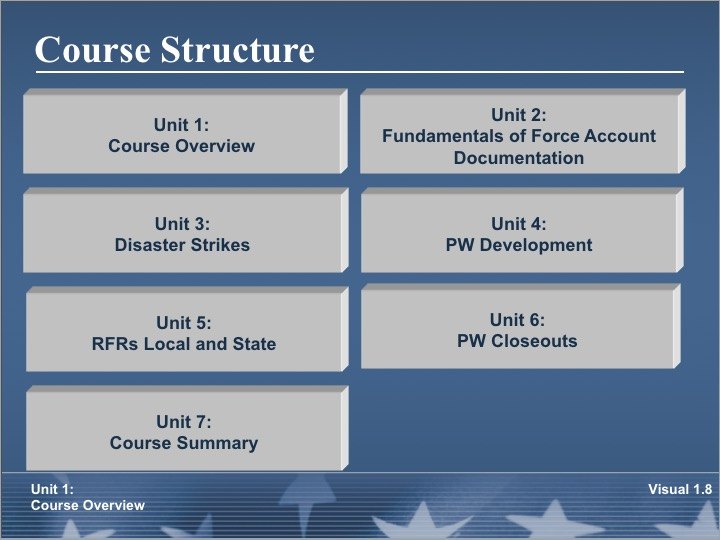
The course walks field staff through the program from their side of the desk: what makes work eligible, what to record while the event is happening, how that record becomes a project worksheet and a request for reimbursement, and what is needed for closeout. It closes with an exam, and students need 70 percent or better to complete it.
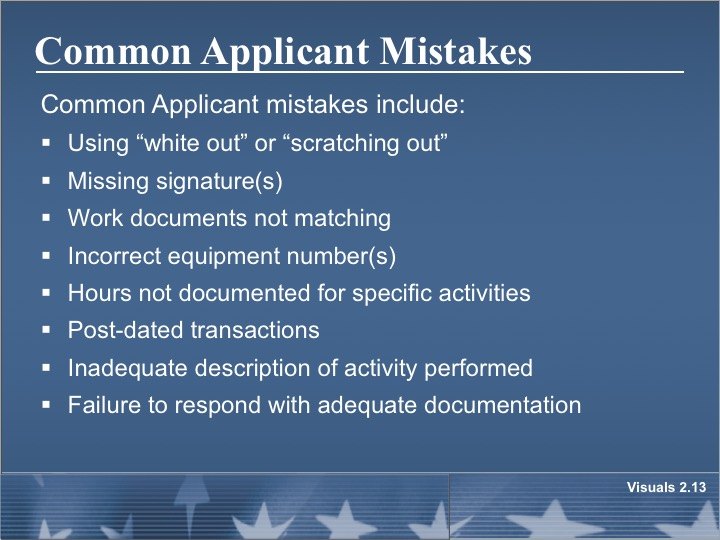
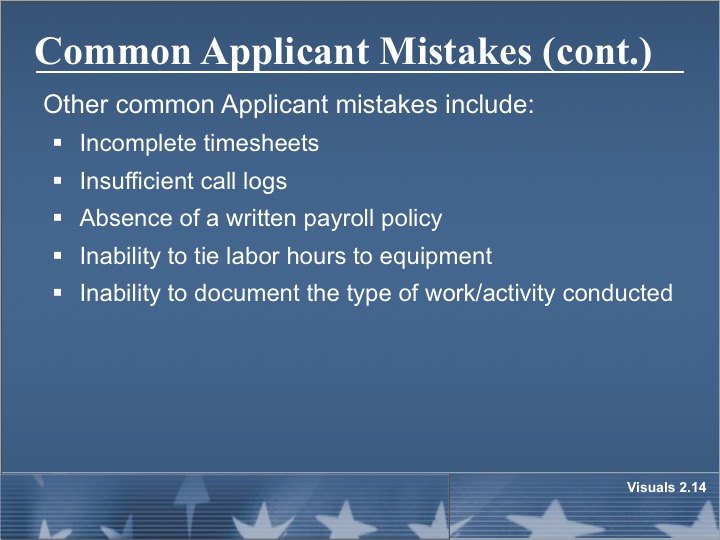
The course names the documentation errors that cost applicants money: white-outs, missing signatures, mismatched records, post-dated entries.
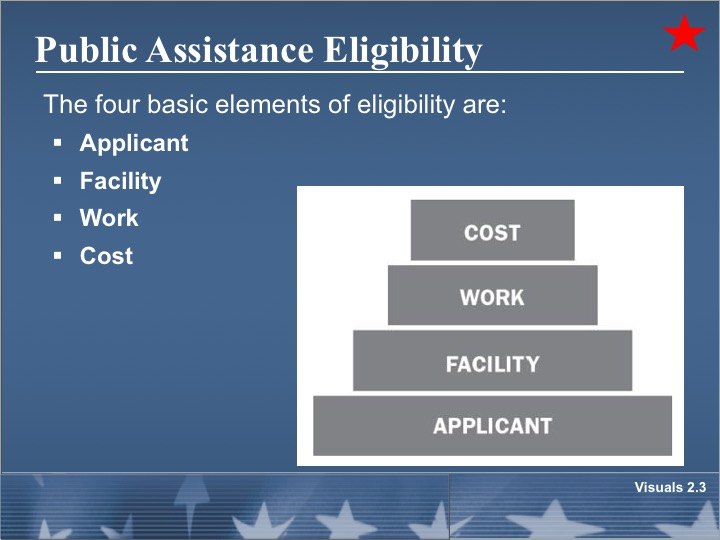
Applicant, facility, work and cost: the four elements every field employee's paperwork has to support.
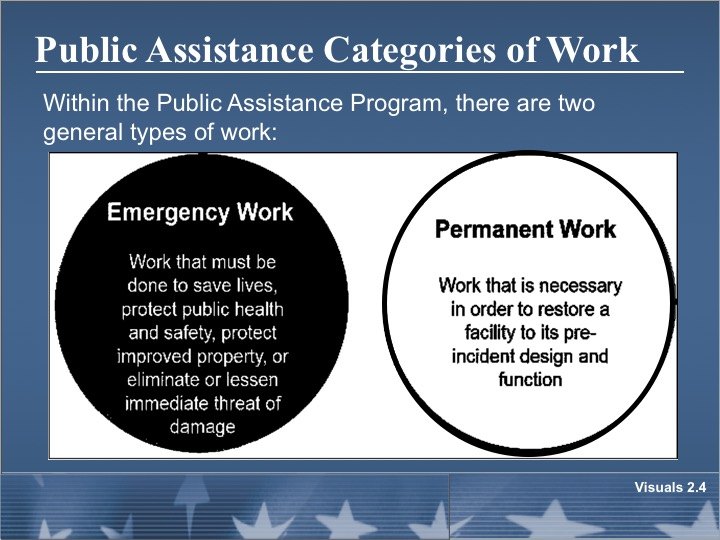
Emergency work and permanent work are documented differently, and the course teaches the difference.
Hours that are not tied to equipment, activity and the declared event cannot be validated, and unvalidated hours are not reimbursed.